
There was a time when General Motors liked working with other carmakers around the world. They had partnerships, joint projects, and shared ideas. But when the financial crisis hit in the 2010s, GM started doing most things on its own. For years, it stayed that way.
Now, that’s changing.
Last year, in September, GM signed a deal with Hyundai, the well-known South Korean automaker. The agreement wasn’t about a single project—it was about building a strong framework so the two companies could create things together in the future. At that time, they didn’t share many details, but the partnership was clear: both wanted to combine strengths and explore new opportunities.
Fast forward almost a year later, and now we finally know what that deal will bring. The two companies just announced that they’ll be working together to make five brand-new vehicles. This is not just a casual handshake—this is a big plan with a lot of promise.
What GM and Hyundai Building
The five vehicles they’re making will be split into two groups. Four of them—a compact SUV, a sedan-like car, a pickup truck, and a mid-size pickup—will be sold only in Central and South America. The fifth one will be a commercial van, and that’s heading to North America. If you live in the United States, you’ll only get to see the van. The other four won’t be sold there, at least not for now.
Why the split? It’s simple. Different regions have different needs. Central and South American markets have a strong demand for smaller, versatile vehicles, while North America has a growing interest in electric commercial vans for deliveries and businesses.
What We Know About the Vehicles
Right now, there aren’t a lot of technical details. None of these new vehicles will hit the market before 2028, so we’re still a few years away from seeing them on the roads. But there are a few key points we do know:
The vehicles made for Central and South America will come with a mix of power options—some will have traditional internal combustion engines, and some will be hybrids. That means buyers in those regions will get to choose between gas-powered and more eco-friendly models.
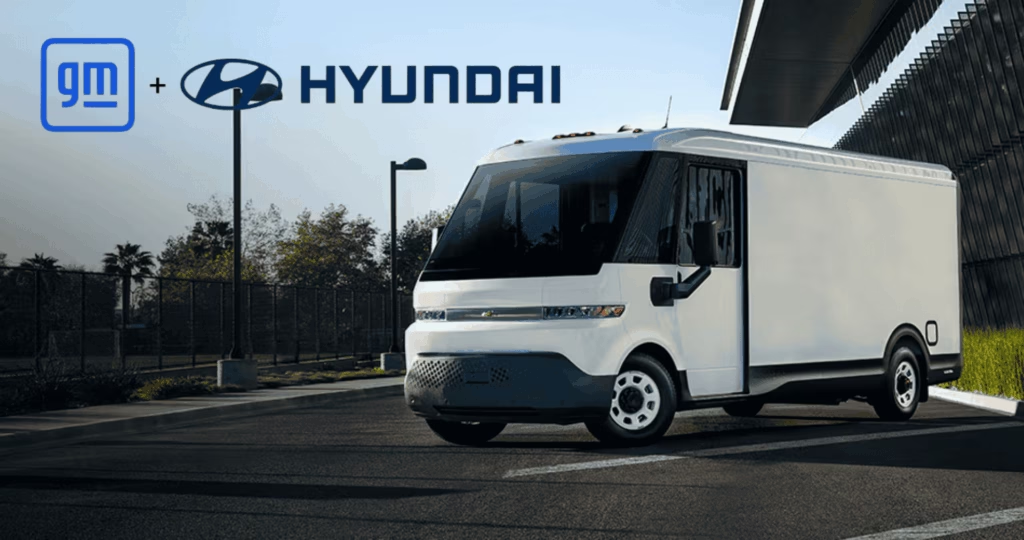
The van, on the other hand, will be fully electric. It’s described as a smaller version of the Chevrolet BrightDrop, which is GM’s current all-electric commercial van. This smaller electric van will be perfect for city deliveries and short-distance hauling, where a big van isn’t always the best fit.
How They’re Building Them
Even though these vehicles will be sold under both GM and Hyundai brands, they’ll share a lot of the same major parts. This is a smart move—it keeps costs lower and makes the production process more efficient.
However, the outside look and the interiors will be different, depending on which brand is selling the model. So, a Hyundai version might have a different design and feel than the GM version, even though under the surface they share a lot of the same components.
In this partnership, GM will take the lead on developing the mid-size pickup truck platform. Hyundai will focus on creating the compact vehicle and the electric van. Both companies will work closely on the SUV and the other pickup truck.
Why This Matters
This isn’t just about five new vehicles. It’s about two global automotive giants deciding to join forces in a competitive industry. By working together, GM and Hyundai can save money, share resources, and reach markets more effectively.
They’re not just building cars and trucks—they’re also joining hands in other areas. This includes sharing sourcing and logistics, which means they’ll work together to buy materials, move parts around the world, and manage their supply chains more efficiently.
They’re also looking at collaborating on raw materials, components, and advanced systems. One interesting idea on the table is using low-carbon emission steel in future projects. This would help cut down on the environmental impact of car production.
Beyond Cars
The partnership doesn’t stop at traditional engines and designs. GM and Hyundai are already talking about working together on the next generation of vehicle technology. This could include improvements to internal combustion engines, hybrid systems, fully electric vehicles, and even hydrogen fuel cell technology.
Hydrogen fuel cells are still a relatively new area in the automotive world, but they could become a big part of future transportation. Having two big companies explore it together could speed up development.
The Numbers Game
The goal for these five new vehicles is ambitious. Once production reaches full speed, the two companies hope to sell about 800,000 units per year combined. That’s a huge number, and it shows how much potential they see in this collaboration.
It also makes sense when you look at the bigger picture. Together, GM and Hyundai already make more vehicles than any other name in the industry. They have nearly two dozen assembly plants around the world. Adding these new models will only strengthen their position in the market.
Why 2028 Is the Target
You might be wondering—why wait until 2028? The truth is, developing new vehicles takes time, especially when multiple companies are involved. There’s planning, design work, testing, and production setup to go through.
Because these vehicles will share many parts but also have different brand-specific designs, the coordination needs to be perfect. Rushing could lead to problems later, so taking the time to do it right makes sense.
Also, automotive trends are shifting fast. By 2028, electric and hybrid technology will be more advanced and cost-effective. Launching these models in that time frame means they’ll be ready for the next wave of market demand.
A Win for Both Sides
This deal looks like a win-win. GM gets to expand its reach in markets where Hyundai is already strong, and Hyundai gets to benefit from GM’s expertise in certain vehicle segments like pickups and commercial vans.
By splitting the work—GM focusing on the mid-size truck platform and Hyundai on the compact vehicle and electric van—they can both play to their strengths. This is the kind of partnership where both companies can come out ahead.
Looking Ahead
It’s still early days, but the GM-Hyundai partnership is one to watch. Over the next few years, we’ll likely see more updates on designs, features, and market plans.
Even though we don’t have the full picture yet, one thing is clear: this isn’t a small experiment. This is a major strategic move that could reshape parts of the automotive market, especially in the Americas.
The mix of traditional engines, hybrids, and electric power shows that both companies are keeping their options open. They’re not betting everything on one type of technology—they’re preparing for different possibilities in the future.
And with the talk of low-carbon steel and hydrogen fuel cells, there’s a good chance this partnership will also have an impact on how environmentally friendly their vehicles will be. For now, we’ll just have to wait and see what the final products look like. But 2028 might not feel that far away when you think about how quickly the auto industry is changing.
Source: General Motors