
Commercial spaceflight is growing at an incredible pace, and we’re quickly heading toward a future where hundreds, maybe even thousands, of spacecraft will need reliable, affordable power. Solar panels are the obvious choice, but there’s a catch. Today’s panels are heavy, bulky, and tricky to transport. That’s where Dcubed steps in with a bold idea that feels straight out of sci-fi.
Why Traditional Solar Panels Aren’t Ideal for Space
Solar energy is perfect in orbit. There’s constant sunlight, no clouds, no night, and no atmosphere to get in the way. But getting solar panels to space is where things get complicated.
Because panels are large, they have to be folded up tightly inside a rocket. This means spacecraft need extra parts, hinges, and mechanisms to unfold them once they reach orbit.
Those components take up precious room, add significant weight, and must survive the intense vibration and noise of launch. All of this makes missions more expensive and limits how much useful equipment a satellite can carry.
Dcubed’s Big Idea
Instead of launching solar arrays that need to unfold, Dcubed wants to manufacture them in orbit. Their system, called ARAQYS, avoids the entire deployment challenge by building panels directly where they’re needed.
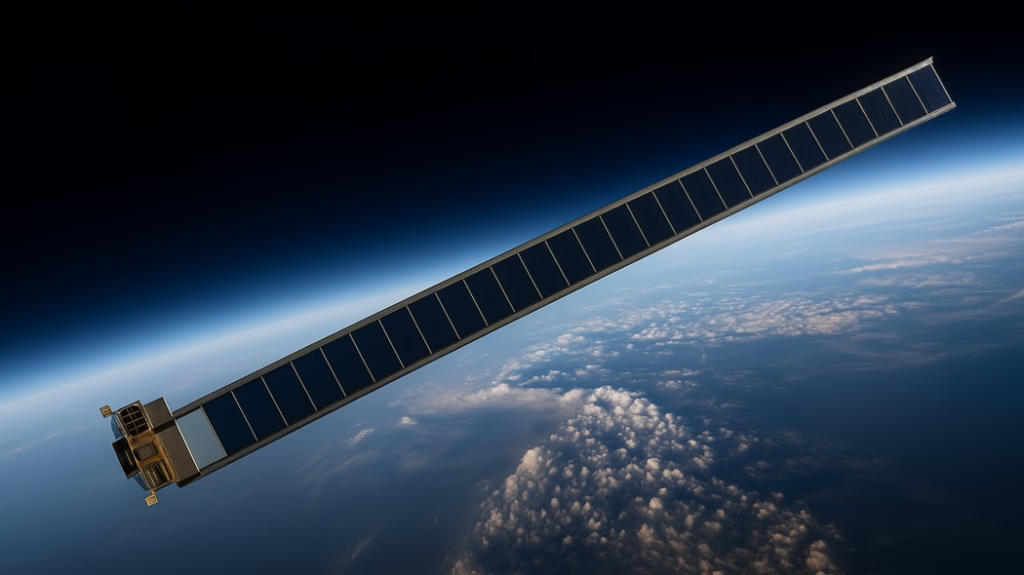
ARAQYS uses an ultrathin, flexible solar blanket that rolls out like a ribbon once a satellite reaches space. As it extends, a built-in 3D printing system creates a rigid support structure on the spot.
The resin used in this structure cures instantly under the harsh UV radiation of space, turning it strong and solid almost immediately. Dcubed believes this approach could slash the cost per kilowatt by orders of magnitude.
Toward Space Built Power
Dcubed isn’t jumping straight to giant solar farms. The company has planned a series of demo missions to prove the technology in stages. The first test aims to build a 60 centimeter boom in orbit by the end of the year. After that, they’ll attempt a larger 1 meter version, leading up to a full 2 kilowatt demonstration in 2027. If all goes well, commercial systems will follow soon after.
What This Could Mean for the Future of Space
Once this technology matures, it could power an entire new generation of spacecraft. Think of space tugs ferrying satellites to new orbits, constellations that process data directly in space, or huge power-beaming systems that transmit energy across vast distances. Manufacturing solar arrays in orbit opens doors to designs that would be impossible to launch from Earth.
A Vision Years in the Making
Dcubed’s CEO, Dr. Thomas Sinn, sees this as the next major leap for the space economy. He started exploring space-based solar power more than 15 years ago during a NASA NIAC study. Since then, he says, the company has been steadily building toward a future where spacecraft generate energy far more easily and cheaply than today. With ARAQYS, he believes they’re finally bringing that vision to life.
Dcubed isn’t just rethinking how we power spacecraft. They’re reimagining how we build in space and that could change the industry forever.
Source: Dcubed