
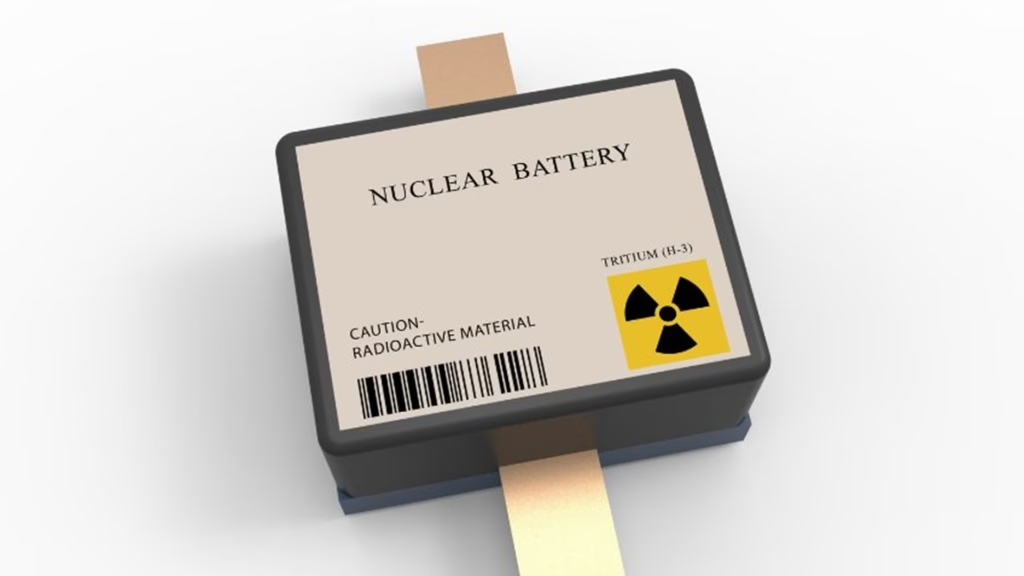
Here’s something pretty interesting in the world of battery technology. A U.S.-based nuclear materials company has revealed a new kind of solid-state battery that it says can run continuously for over 100 years without needing any maintenance. Yes, you heard that right—over a century of power from a single device.
This battery isn’t meant for your phone or laptop. It’s designed for ultra-low-power electronics that operate in places where replacing or recharging a battery is difficult, expensive, or simply not possible. Think remote sensors, monitoring systems, or equipment placed in harsh environments where human access is limited.
The company behind this innovation, NRD LLC, calls its product the NBV series. It uses something known as a betavoltaic design, which generates electricity from the natural radioactive decay of a material called Nickel-63. Instead of storing energy like traditional batteries, this device produces a steady trickle of power over a very long period.
So how does that work? Betavoltaic batteries convert the energy released during beta decay into electrical current. Unlike conventional batteries that eventually run out, this system keeps producing energy as long as the radioactive material continues to decay. The trade-off is that the power output is extremely low, but it’s incredibly consistent.
According to the company, the NBV series delivers power in the range of 5 to 500 nanowatts. It operates between 1.0 and 20.0 volts, with very small currents measured in nanoamps, all packed into a compact device about the size of a small matchbox. That makes it ideal for applications like sensors, data loggers, and monitoring systems that don’t need much power but do need it constantly.
The idea here is reliability. In critical systems, even a small component like a battery failing can cause the entire setup to stop working. That’s why this kind of long-lasting, maintenance-free power source could be valuable in industries like environmental monitoring, infrastructure tracking, and security systems. It could also support AI-powered autonomous platforms that need a constant low-level power supply to maintain their operations.
This battery is especially suited for remote deployments, including long-term health monitoring systems or infrastructure sensors placed in hard-to-reach locations. In these scenarios, not having to replace a battery for decades could save both time and cost.
NRD also highlights its background in working with nuclear materials, including producing components used in devices like smoke detectors. The company says it has the facilities and safety programs in place to support production, but it hasn’t shared a clear timeline for when these batteries will be widely available.
Of course, while the idea of a 100-year battery sounds impressive, real-world performance will depend on several factors. Efficiency, shielding, and how the battery is integrated into systems will all play a role. These claims haven’t been independently verified yet, so it’s something to watch as the technology develops.
Still, this is a fascinating step forward in niche power solutions. It’s not about replacing everyday batteries, but about solving very specific problems where long-term, reliable energy is essential.