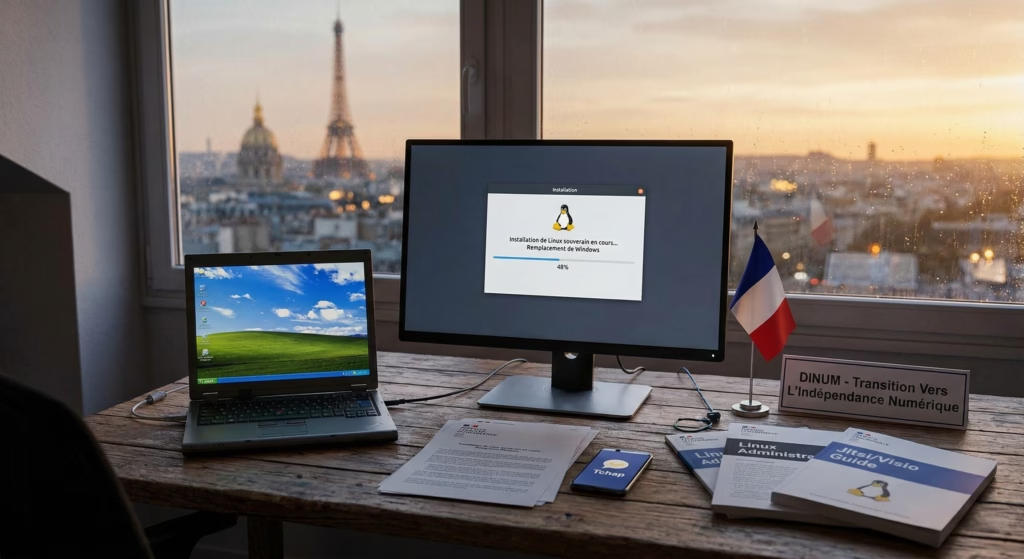
France is taking a big step toward controlling its own digital future, and it’s something that could reshape how governments think about technology. The country is starting to move parts of its government systems away from Microsoft Windows and toward Linux, an open-source platform that gives users far more control over how their systems run.
This shift isn’t happening overnight, but it’s already in motion. The transition will begin with DINUM, the agency at the heart of France’s digital operations. While officials haven’t shared a full timeline or picked a specific Linux version yet, the direction is clear. The goal is to strengthen national infrastructure and reduce reliance on foreign technology providers.
French leaders are framing this as more than just a tech upgrade. David Amiel made it clear that this move is about reclaiming control over the country’s data and systems. There’s growing concern across Europe that depending too heavily on external companies could leave critical infrastructure exposed, especially during times of geopolitical tension.
This isn’t just a France-only idea either. The European Parliament has already pushed for identifying areas where reliance on foreign providers can be reduced. The thinking is simple: if key systems are controlled by others, access can be restricted when it matters most. That risk has become more real in recent years, especially with sanctions showing how quickly services can be cut off.
That’s where Linux becomes so important. Because it’s open source, governments can adapt it to their exact needs, inspect how it works, and avoid being locked into a single vendor. France sees this flexibility as a major advantage, especially when it comes to security and long-term independence.
The move away from U.S.-based software is already happening in other areas too. France has stopped using Microsoft Teams for internal government communication and replaced it with a homegrown solution called Visio, which is built on Jitsi. Alongside that, tools like Tchap and FranceTransfert are becoming part of a fully controlled digital ecosystem.
This transition is already impacting a large number of people. Around 80,000 health insurance employees in France have shifted to open-source platforms, replacing services like Zoom and Dropbox. It’s a clear sign that these alternatives are now capable of handling real-world, large-scale operations.
France is also planning to bring sensitive health data back under national control by moving it to a trusted domestic platform. That step highlights just how serious the country is about securing its most critical information.
What this all shows is a bigger shift happening right now. Open-source software is no longer seen as a niche option. It’s becoming a serious competitor to proprietary systems, even at the highest levels of government. And as France pushes forward, it could encourage other countries to rethink their own dependence on foreign tech.
For major U.S. tech companies, this could mean slower growth in international government contracts. But for countries like France, it’s about something much bigger—building a system they fully own, control, and trust.