
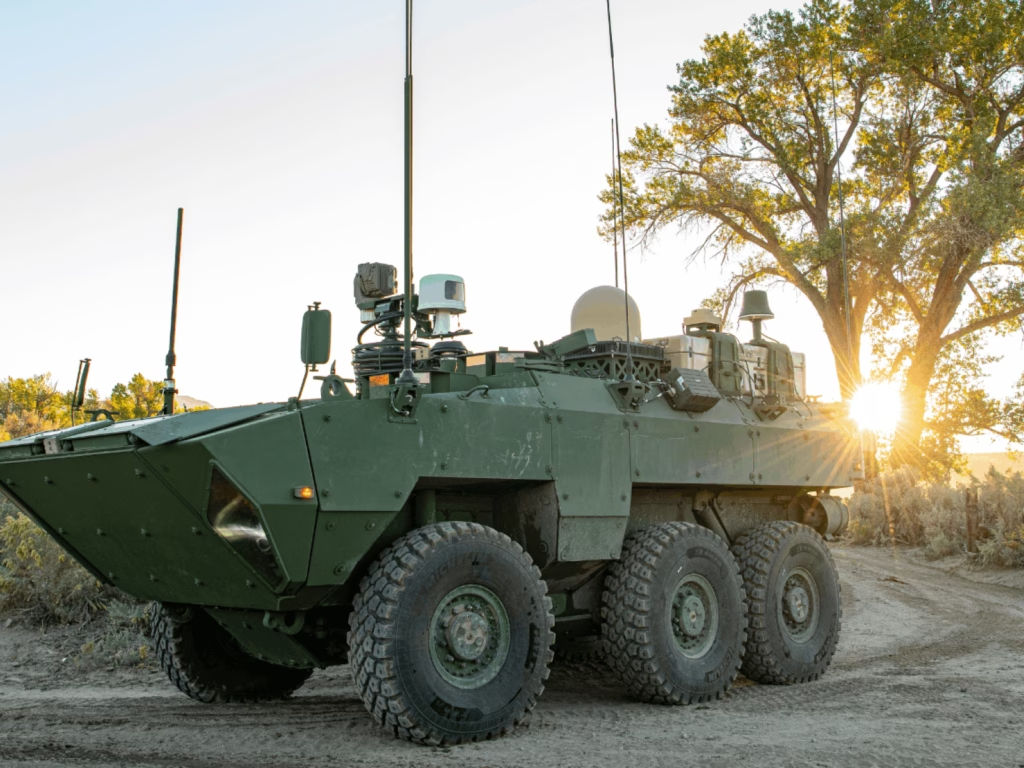
Textron Systems has secured a massive $450 million Pre-Production Development agreement with the United States Marine Corps for its Advanced Reconnaissance Vehicle program. As part of this deal, the company will deliver 16 Cottonmouth pre-production vehicles, along with systems integration labs and specialized blast hulls to support testing and development.
This Cottonmouth vehicle has been in the works since 2019, built from the ground up with direct input from the Marines themselves. The goal here is to create something far more than just a reconnaissance vehicle. It’s designed to be highly adaptable, extremely mobile, and capable of acting like a central command hub right on the battlefield.
One of the biggest ideas behind this vehicle is flexibility. The design uses a modular open system architecture, which means it can be upgraded and adapted easily as technology evolves or mission needs change. That’s a big deal for modern warfare, where staying ahead often comes down to how quickly systems can evolve.
The Cottonmouth will come in three different variants, each tailored for a specific role. The C4UAS version is essentially the brain of the operation, designed to coordinate battlefield activity and act as a powerful sensor node. It’s built to improve how Marines gather information, communicate, and make decisions in real time, all while staying highly maneuverable.
Then there’s the 30mm variant, which brings serious firepower into the mix. This version is focused on direct combat, with the ability to engage enemy forces and handle armored threats when needed.
The third version is the logistics variant, designed to keep everything running smoothly in the field. It focuses on transporting supplies and supporting operations, making sure frontline units stay equipped and operational.
Once these vehicles are delivered, they’ll go through extensive testing led by the government. This phase is all about making sure they perform exactly as expected and meet the strict requirements set by the Marine Corps.
Another key feature of the Cottonmouth is its role in future warfare technologies. The C4UAS platform is being developed to work alongside robotic and autonomous systems, helping integrate those capabilities into real-world operations. That means better situational awareness and smarter coordination across the battlefield.
Over the past few years, Textron Systems has already been working closely with the Marine Corps, delivering prototype versions of these vehicles and systems for testing. This collaboration has helped refine the design and reduce risks before moving into this next phase.
The vehicles are being built in Slidell, Louisiana, with additional engineering and design work taking place in Hunt Valley, Maryland. They combine decades of experience in ground vehicle manufacturing with cutting-edge innovations tailored for modern combat environments.
What really sets the Cottonmouth apart is its combination of amphibious mobility, advanced sensors, and electronic warfare capabilities. It’s built to operate across different terrains, detect threats beyond line of sight, and provide a level of battlefield awareness that gives Marines a significant edge.
In many ways, this vehicle is being positioned as a force multiplier, something that doesn’t just perform one role but enhances the effectiveness of everything around it. With its mix of mobility, intelligence, and firepower, it’s designed to reshape how reconnaissance missions are carried out in the future.