
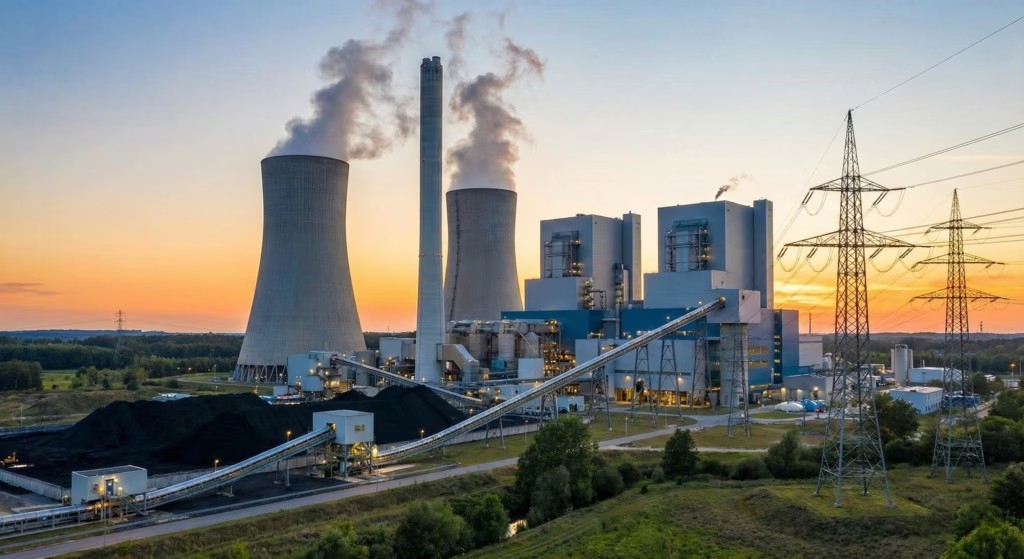
Imagine flipping a light switch and instantly filling a room with brightness. It feels almost magical, yet behind that simple action is a long and powerful story. One of the most important chapters in that story involves coal. For over a century, coal has played a major role in producing electricity that powers homes, schools, hospitals, and entire cities. Understanding how coal is converted into electricity helps you see energy not as something abstract, but as a carefully guided process that transforms raw earth into usable power.
This journey begins far beneath the ground and ends at the outlets in your walls. Along the way, heat becomes motion, motion becomes energy, and energy becomes something you rely on every day. Let us walk through this process together in a clear and friendly way, as if we are standing inside a power plant watching it all happen.
What Coal Really Is and Why It Matters
Coal is a type of fossil fuel. It formed millions of years ago from ancient plants that were buried under layers of soil and rock. Over time, heat and pressure changed those plants into a dark, solid material rich in carbon. That carbon is important because it stores energy. When coal is burned, that stored energy is released as heat.
For many years, coal became popular because it was plentiful and relatively easy to transport. Large deposits existed in many parts of the world, making it a reliable fuel for growing industries and expanding cities. Even today, many power plants still use coal to generate electricity, especially in regions where other energy sources are limited.
Coal itself does not produce electricity. Instead, it acts like a key that unlocks a chain reaction of energy changes. Each step builds on the one before it, turning solid rock into flowing electrons.
From the Ground to the Power Plant
The journey of coal begins in a mine. Coal is extracted from the earth either through underground mining or surface mining. Once it is brought to the surface, it is cleaned to remove dirt and unwanted materials. This cleaning step improves efficiency and reduces waste during burning.
After cleaning, coal is transported to power plants. Trains are the most common method because they can carry large amounts over long distances. Trucks and ships are also used depending on location. When the coal arrives at the plant, it is stored in large piles or silos, ready to be used when electricity demand rises.
At this stage, coal still looks like a simple black rock. Its transformation into electricity has not yet begun, but everything is in place.
Inside a Coal Power Plant
A coal power plant may look complex from the outside, with tall stacks and massive buildings, but its basic purpose is straightforward. It is designed to convert the energy stored in coal into electrical energy that can travel across power lines.
Inside the plant, coal is first crushed into a fine powder. Grinding coal helps it burn more efficiently and evenly. This powdered coal is then blown into a large furnace.
The furnace is the heart of the power plant. This is where the real transformation starts.
Burning Coal and Creating Heat
When powdered coal enters the furnace, it is burned at very high temperatures. This burning process is called combustion. During combustion, the carbon in coal reacts with oxygen in the air. This reaction releases a tremendous amount of heat.
Heat is the first useful form of energy in this process. The furnace becomes extremely hot, often reaching temperatures hot enough to glow. This heat does not directly make electricity, but it sets the next step into motion.
Surrounding the furnace are pipes filled with water. As the furnace heats up, the heat transfers to the water inside these pipes.
Turning Water Into High Pressure Steam
As the water absorbs heat from the furnace, it begins to boil. Eventually, it turns into steam. This is not ordinary steam like you see rising from a kettle. This steam is under very high pressure and temperature.
High pressure steam is powerful. It wants to expand and move, and that movement is exactly what the power plant needs. The steam is directed through thick pipes toward a turbine.
At this moment, heat energy has become motion energy. This change is one of the most important steps in converting coal into electricity.
How Turbines Turn Motion Into Power
A turbine is a large wheel with many blades, similar to a fan. When high pressure steam rushes toward the turbine, it pushes against the blades. This causes the turbine to spin rapidly.
The spinning turbine represents mechanical energy. The faster it spins, the more energy it carries. The design of the turbine allows it to capture as much energy from the steam as possible.
As steam passes through the turbine, it loses pressure and cools down. After doing its job, the steam is sent away to be reused, which we will explore shortly.
For now, focus on the spinning turbine. This motion is the bridge between heat and electricity.
Generators and the Birth of Electricity
The turbine is connected to a generator by a long shaft. When the turbine spins, it turns the generator as well. Inside the generator, something remarkable happens.
Generators use magnets and coils of wire. When the coils move through a magnetic field, they create an electric current. This is a principle of physics known as electromagnetic induction. You do not need to memorize the term to understand the idea. Movement creates electricity.
As the generator spins, it produces a steady flow of electrical energy. This electricity is what eventually powers lights, appliances, computers, and countless other devices.
At this point, coal has completed its main job. Its stored energy has traveled through heat, steam, motion, and finally into electricity.
Cooling the Steam and Reusing Water
After steam passes through the turbine, it is no longer useful in its current form. It needs to be cooled and turned back into water so it can be used again.
This happens in a device called a condenser. The condenser removes heat from the steam, causing it to condense back into liquid water. Cooling often uses water from rivers, lakes, or cooling towers.
Once the steam becomes water again, it is pumped back to the furnace area to repeat the cycle. This recycling of water makes the process more efficient and conserves resources.
The cycle of heating, steaming, spinning, and cooling continues as long as the plant is operating.
Transforming Electricity for Long Distance Travel
The electricity produced by the generator is not yet ready to travel long distances. At the power plant, electricity is generated at a relatively low voltage. Sending it this way would result in significant energy loss.
To solve this problem, the electricity passes through a transformer. The transformer increases the voltage, allowing electricity to travel efficiently across long distances through power lines.
These high voltage lines stretch across landscapes, connecting power plants to cities and towns. Along the way, additional transformers lower the voltage again so it is safe for homes and businesses.
By the time electricity reaches your wall outlet, it has traveled many miles and passed through multiple transformations.
What Happens to the Smoke and Gases
Burning coal produces gases and particles that must be managed carefully. Modern power plants use various systems to reduce harmful emissions.
Filters and scrubbers remove ash and pollutants from the exhaust gases. These systems help reduce the release of substances that can harm air quality and human health.
The tall stacks you see at coal power plants help release treated gases high into the atmosphere, where they disperse more easily. While this does not eliminate environmental concerns, it represents efforts to reduce the impact of coal burning.
Understanding these systems helps explain why coal power plants are large and complex facilities.
Ash and Solid Waste Handling
Not everything in coal burns completely. After combustion, ash remains. This ash is collected and stored or reused.
Some ash is used in construction materials like concrete and road base. Reusing ash reduces waste and gives it a second life.
Handling ash safely is an important part of operating a coal power plant. It ensures that leftover materials do not harm surrounding land or water.
Why Coal Was So Important Historically
Coal helped power the industrial growth of many nations. Factories, trains, and early electric grids relied on coal because it provided consistent energy.
Before coal powered electricity, energy sources were limited. Water wheels and windmills depended on weather and location. Coal offered control and reliability, which made large scale electricity production possible.
Even though energy technology continues to evolve, coal shaped the modern electrical world in lasting ways.
Efficiency and Energy Loss Along the Way
No energy conversion process is perfect. Some energy is always lost as waste heat. In coal power plants, not all the heat from burning coal becomes electricity.
Engineers work to improve efficiency by capturing more heat and reducing losses. Advanced designs and better materials have improved performance over time.
Understanding energy loss helps explain why power plants are designed with careful attention to detail. Every improvement means more electricity from the same amount of coal.
How Coal Electricity Reaches Your Home
Once electricity enters the grid, it becomes part of a vast network. Power stations, substations, and transmission lines work together to balance supply and demand.
When you turn on a light, electricity flows almost instantly from the grid to your home. You are connected to power plants that may be hundreds of miles away.
This seamless experience hides the complexity behind it. Coal based electricity is the result of coordination between machines, physics, and human planning.
Comparing Coal to Other Energy Sources
Coal is just one way to produce electricity. Other sources include natural gas, nuclear energy, wind, solar, and water power.
Each source has strengths and challenges. Coal is reliable and powerful but raises environmental concerns. Renewable sources are cleaner but depend on natural conditions.
Learning how coal works gives you a foundation for understanding other energy systems. Many of them use similar principles, such as spinning turbines and generators.
The Human Side of Coal Power
Behind every power plant are people. Engineers monitor systems, technicians maintain equipment, and operators ensure safety.
Training and experience are critical. A coal power plant operates continuously, often day and night. Human judgment plays a key role in keeping electricity flowing smoothly.
Thinking about the people involved adds a human dimension to the technical process.
The Future of Coal and Electricity
Energy needs continue to grow as technology advances. At the same time, societies are exploring cleaner and more sustainable energy options.
Coal power plants may change or decrease in number, but the lessons learned from them remain valuable. The basic idea of converting heat into motion and motion into electricity is used in many other systems.
Understanding coal electricity helps prepare you to understand future energy solutions.
Seeing Electricity Differently
Next time you flip a switch, you may think about the journey behind that light. You may picture coal deep underground, burning in a furnace, boiling water, spinning turbines, and generating electricity miles away.
This awareness connects you to a larger system. Electricity becomes more than something you use. It becomes something you understand.
Coal to electricity is a story of transformation. It is a story of nature, science, and human ingenuity working together to power everyday life.