
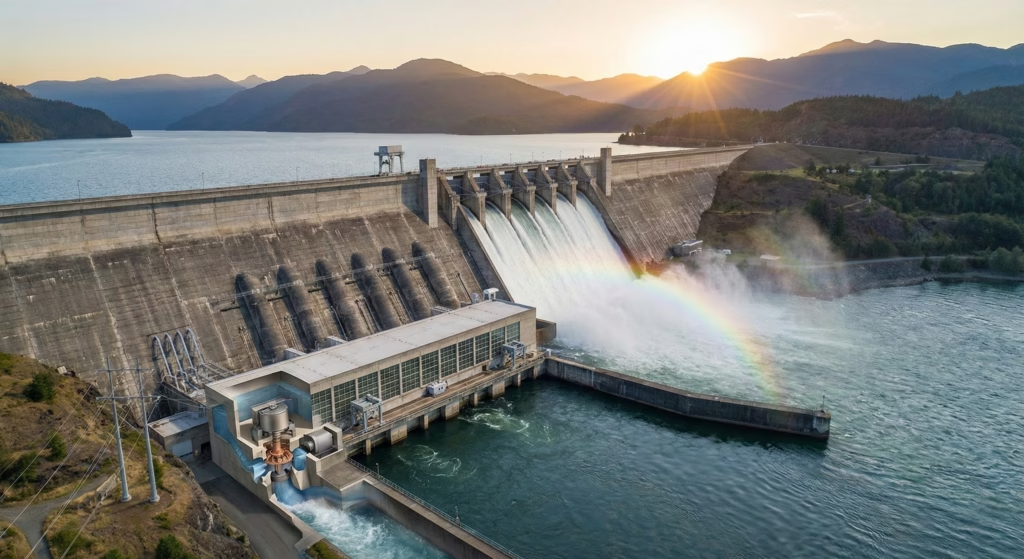
Picture yourself standing near a massive concrete wall stretching across a river. Water presses against it, calm on one side and rushing away on the other. This structure is not just holding back water. It is quietly creating electricity for thousands or even millions of people. That is the magic of a hydroelectric dam.
Hydroelectric dams may look intimidating, but the idea behind them is surprisingly simple. They use the natural force of moving water to generate power. No smoke stacks, no fuel trucks, no roaring flames. Just gravity, motion, and smart engineering working together.
Understanding how hydroelectric dams work does not require an engineering degree. Once the process is broken down step by step, it feels almost intuitive. Let us walk through the journey of water as it becomes electricity, from river to power outlet.
The Basic Idea Behind a Hydroelectric Dam
Everything starts with water at a higher elevation. When water sits high above the ground, it stores energy simply because gravity wants to pull it down. This stored energy is called potential energy.
A hydroelectric dam is built to create this height difference. By blocking a river, the dam forms a large body of water known as a reservoir. The water in the reservoir sits higher than the land below the dam. That height is the key.
When water is released from the reservoir, gravity pulls it downward. As it moves, potential energy turns into kinetic energy. This moving water is what ultimately generates electricity.
The dam itself does not produce power. It simply controls the water. The real work happens inside the powerhouse.
Why Dams Are Built on Rivers
Rivers are nature’s highways for moving water. They flow constantly and often carry huge volumes of water downhill. This makes them perfect for generating energy.
A dam allows engineers to control that flow. Without a dam, water would rush past at its own pace, sometimes fast and sometimes slow. With a dam, water can be stored and released when electricity is needed most.
This control makes hydroelectric power reliable. Operators can increase or decrease electricity production depending on demand. When people wake up and start using power, more water can be released. When demand drops, the flow can be reduced.
The Reservoir and Its Role
Behind most hydroelectric dams is a reservoir. This is the lake that forms when a river is blocked. The reservoir serves as energy storage.
Water sitting in the reservoir is like a charged battery. It holds energy until it is needed. The larger and higher the reservoir, the more energy it can store.
Reservoirs also help manage water supply. During heavy rains, they can store excess water and reduce flooding downstream. During dry periods, they can release water steadily to maintain power production and water availability.
The reservoir is one of the reasons hydroelectric dams can produce electricity day and night, unlike some other renewable sources.
How Water Enters the Dam
When electricity is needed, gates in the dam open. Water from the reservoir flows into large pipes called penstocks. These penstocks guide the water from the high reservoir down toward the turbines.
The design of the penstocks is critical. They are built to handle enormous pressure and high speeds. The faster the water flows and the farther it falls, the more energy it carries.
As the water rushes through the penstocks, it gains speed and force. By the time it reaches the turbine, it is ready to do serious work.
Turbines and Spinning Power
At the bottom of the penstocks sit the turbines. These look a bit like giant fans or propellers. When water strikes the turbine blades, it causes them to spin.
This spinning motion is mechanical energy. The faster the water flows, the faster the turbine spins. Different dams use different turbine designs depending on water speed and height.
Some turbines are designed for high water drops with smaller flow. Others work best with large volumes of slower moving water. Engineers choose the turbine that matches the river and dam design.
The spinning turbine is the heart of the hydroelectric system. Without it, water would simply rush through and continue downstream.
From Turbine to Generator
The turbine is connected to a generator by a shaft. When the turbine spins, it turns the generator as well.
Inside the generator, magnets spin past coils of wire. This movement causes electrons to flow through the wire, creating electricity. This process is called electromagnetic induction.
It happens instantly and continuously as long as the turbine spins. The electricity produced is alternating current, which is the type used in homes and businesses.
At this point, the energy journey is almost complete. Moving water has become electrical energy.
What Happens to the Water Afterward
After spinning the turbine, the water does not disappear. It exits the dam through channels called tailraces and returns to the river below.
The water is not consumed or damaged by the process. It continues flowing downstream, supporting ecosystems, agriculture, and communities.
This is one reason hydroelectric power is considered renewable. The same water can generate electricity again and again as part of the natural water cycle.
Rain falls, rivers flow, dams generate power, and the cycle continues.
Controlling Electricity Output
One of the greatest strengths of hydroelectric dams is control. Operators can adjust how much water flows through the turbines.
If electricity demand increases, more water is released. Turbines spin faster and produce more power. If demand drops, water flow is reduced.
This ability to respond quickly makes hydroelectric dams extremely valuable. They can go from low output to full power in minutes, sometimes seconds.
This flexibility helps stabilize the power grid and supports other renewable sources like solar and wind.
The Powerhouse Inside the Dam
The powerhouse is the building that houses the turbines, generators, and control equipment. It can be located at the base of the dam or slightly downstream.
Inside, everything is carefully monitored. Sensors track water pressure, turbine speed, temperature, and electrical output. Operators use this data to ensure safe and efficient operation.
Modern powerhouses often use advanced computer systems to automate many processes. This improves reliability and reduces the risk of equipment damage.
Despite the high technology, the basic principle remains the same as it was over a century ago.
Transformers and Power Lines
Electricity produced by the generator is not ready for long distance travel. It first passes through transformers that increase its voltage.
Higher voltage allows electricity to travel long distances with less energy loss. From the dam, power lines carry electricity to cities, towns, and rural areas.
Substations along the way reduce the voltage to safe levels before electricity enters homes and businesses.
This entire network works together to deliver clean power from a flowing river to your wall socket.
Different Types of Hydroelectric Dams
Not all hydroelectric dams work exactly the same way. Some are built on large rivers with massive reservoirs. Others use smaller structures and natural river flow.
Storage dams are the most common. They rely on large reservoirs to store water and control output.
Run of river dams generate electricity using the river’s natural flow with little or no storage. They usually have less environmental impact but less flexibility.
Pumped storage dams act like energy storage systems. They move water uphill when electricity demand is low and release it when demand is high.
Each type serves a different purpose depending on geography and energy needs.
Why Height and Flow Matter
Two factors determine how much electricity a hydroelectric dam can produce. These are the height of the water drop and the amount of water flowing through the turbines.
A higher drop gives water more energy. A larger flow means more water pushing the turbine blades.
Engineers carefully study river conditions before building a dam. They calculate how much power can be generated based on these factors.
This is why mountainous regions with strong rivers are often ideal for hydroelectric power.
Environmental Considerations
Hydroelectric dams provide clean energy, but they also change natural river systems. Reservoirs can flood land and alter habitats.
Fish migration is another concern. Some species rely on free flowing rivers to reach spawning grounds.
Modern dams include features like fish ladders and improved turbine designs to reduce harm. Environmental planning plays a major role in new projects.
Balancing energy production with ecosystem health is a key part of responsible hydropower development.
Safety and Structural Strength
Hydroelectric dams are among the strongest structures humans build. They are designed to withstand extreme water pressure, earthquakes, and floods.
Engineers use reinforced concrete and precise calculations to ensure stability. Dams are regularly inspected and maintained to prevent failure.
Monitoring systems detect even small changes in structure or water behavior. This constant oversight keeps communities downstream safe.
Safety is always a top priority in dam operation.
Hydroelectric Dams and Everyday Life
Many people benefit from hydroelectric dams without ever seeing one. The electricity they produce powers lights, appliances, schools, hospitals, and transportation.
Hydropower often supports industries that require steady energy supply. It also helps keep electricity prices stable due to low operating costs.
Beyond power, dams can provide water for irrigation, recreation, and flood control.
Their influence reaches far beyond the river they sit on.
The Role of Hydroelectric Dams in Clean Energy
As the world shifts toward cleaner energy, hydroelectric dams play a critical role. They produce electricity with very low emissions during operation.
Their ability to store energy and respond quickly makes them perfect partners for solar and wind power.
When the sun sets or wind slows, hydroelectric dams can step in and fill the gap.
This reliability makes them a cornerstone of many renewable energy systems.
Challenges Facing Hydroelectric Dams
Changing climate patterns affect water availability. Droughts can reduce power production, while heavy rains require careful water management.
Aging infrastructure is another challenge. Many dams were built decades ago and need upgrades to remain efficient and safe.
Public concerns about environmental and social impacts also influence new projects.
Innovation and thoughtful planning are essential to address these challenges.
Modern Improvements and Innovation
Technology continues to improve how hydroelectric dams work. New turbines are more efficient and less harmful to wildlife.
Digital controls allow better prediction of water flow and energy demand. This leads to smarter operation and reduced waste.
Some dams are being retrofitted with power generation equipment, adding clean energy without building new structures.
These advancements keep hydropower relevant in a changing world.
A Step by Step Journey of Water to Electricity
Water waits in the reservoir, storing energy. Gates open and gravity pulls water into penstocks. The water rushes downward, spinning turbines. Turbines turn generators. Generators produce electricity. Water returns to the river. Electricity flows to homes.
This elegant process happens continuously and quietly.
It is a powerful reminder of how natural forces can support modern life.
Why Understanding Hydroelectric Dams Matters
Knowing how hydroelectric dams work helps you appreciate the systems that power daily life. It also shows how engineering can work with nature instead of against it.
Hydroelectric dams represent a balance of simplicity and complexity. The idea is straightforward, yet the execution requires precision and care.
As energy needs grow and environmental concerns rise, understanding these systems becomes even more important.
The Lasting Power of Flowing Water
Flowing water has shaped landscapes for millions of years. Humans have learned to harness that motion in remarkable ways.
Hydroelectric dams turn rivers into reliable sources of clean electricity. They tell a story of innovation, adaptation, and respect for natural forces.
The next time you see a dam or cross a river, remember the hidden journey happening within. Water is moving. Turbines are spinning. Electricity is flowing. All because gravity and human ingenuity came together in a powerful way.