
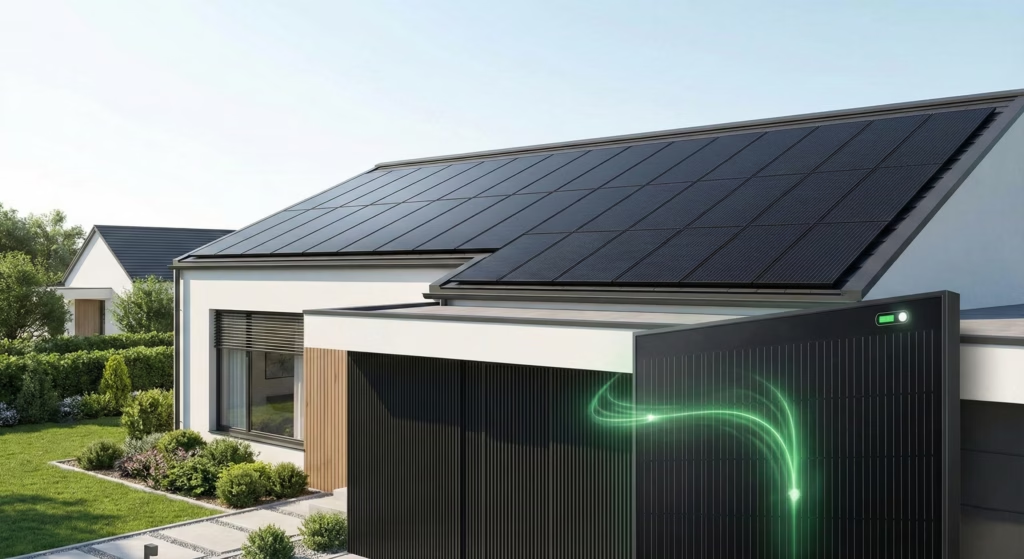
If you have ever looked at a rooftop covered in shiny blue panels, you may have wondered how much sunlight they actually turn into usable power. It feels a little magical to imagine sunlight becoming electricity for your lights, phone, and fridge. The good news is that solar panels today are far more capable than many people realize, and their efficiency keeps quietly improving year after year.
What Efficiency Really Means
When people talk about solar panel efficiency, they are simply asking how much sunlight hitting the panel gets turned into electricity. Imagine sunlight as rain falling on a bucket. Efficiency tells you how much of that rain you actually catch instead of letting it splash away. A panel with higher efficiency catches more of that sunlight and turns it into power you can use.
This does not mean less efficient panels are bad. It just means they need a bit more space to produce the same amount of electricity.
Where Solar Panels Stand Today
Most solar panels sold for homes today convert about eighteen to twenty three percent of sunlight into electricity. That might sound small at first, yet it is actually impressive when you remember how challenging it is to capture energy from light moving at incredible speed.
Premium panels can go even higher, especially those designed for limited roof space. In laboratories, researchers have already pushed solar cells much further. Some experimental designs reach well above thirty percent efficiency. Those versions are not common on rooftops yet, but they show what is possible.
Why Modern Panels Perform So Well
The biggest reason solar panels are more efficient today comes down to better materials and smarter design. Engineers have learned how to guide electrons more smoothly through the panel so less energy is lost as heat. Manufacturers also cut down on tiny defects that once trapped energy before it could become electricity.
Another quiet improvement comes from how panels handle light. Modern panels are better at absorbing sunlight from different angles and during cloudy conditions. This means they keep producing power even when the sun is not perfectly overhead.
What Holds Efficiency Back
No matter how advanced panels become, physics still sets limits. Some sunlight will always reflect away or pass through without being captured. Heat also steals a little energy, especially on very hot days.
Cost matters too. A panel that squeezes out every possible bit of efficiency may be too expensive for everyday use. The goal is not just high efficiency but a balance between performance, durability, and price.
What Efficiency Means for Your Roof
For homeowners, efficiency affects how much power you can produce in a given space. A smaller roof benefits from higher efficiency panels because every square foot counts. Larger roofs can still do great with slightly lower efficiency panels and often at a lower cost.
It also helps to remember that efficiency is only part of the story. Panel placement, sunlight exposure, and local weather play huge roles in real world performance. A well placed system with good sunlight can outperform a more efficient system stuck in shade.
The Road Ahead for Solar Power
The future of solar efficiency looks promising. Researchers are experimenting with layered solar cells that capture different parts of sunlight more effectively. These advances aim to bring laboratory success into everyday products.
As efficiency improves, solar energy becomes even more accessible. More power from the same space means lower costs, cleaner energy, and fewer barriers for homes and communities.
A Sunny Takeaway
Solar panels today are efficient enough to power homes, schools, and entire neighborhoods. They may not capture every ray of sunlight, but they capture enough to make a real difference. Each improvement brings us closer to a world where sunlight quietly powers daily life, one rooftop at a time.