
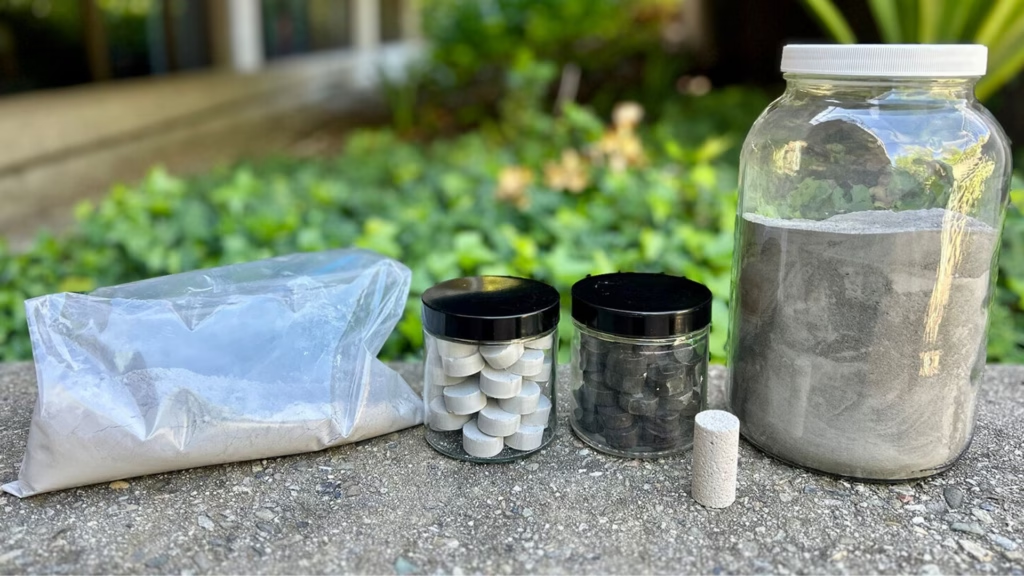
You probably don’t think much about cement, but it’s one of the biggest hidden sources of pollution on the planet. A Stanford geophysicist, Tiziana Vanorio, has come up with a new solution called Phlego that could cut cement-related carbon emissions by an impressive 67 percent. What makes this even more interesting is that the idea didn’t come from modern tech labs alone, it was inspired by ancient Roman concrete and volcanic rock formations found near Pozzuoli in Italy.
Cement production today depends heavily on limestone, which has to be heated to extremely high temperatures to create clinker. That process releases a huge amount of carbon dioxide, not just from burning fuel but also from the chemical breakdown of the rock itself. In fact, this single step is responsible for most of the cement industry’s emissions. On top of that, nearly half of the raw material is lost as gas instead of becoming part of the final product.
Instead of relying on limestone, Vanorio turned to volcanic rock, something nature has already “pre-cooked” over millions of years. By studying how rocks naturally form deep underground, she discovered a way to recreate those processes in a controlled environment. The result is Phlego, a material that avoids the most polluting stage of cement production entirely.
When Phlego is heated, it doesn’t release carbon dioxide like traditional cement does. Instead, it produces a strong and durable material with a unique internal structure that resists cracking. These properties are similar to the natural rock formations found in volcanic regions, which are known for their strength and longevity.
Another big advantage is how easy it is to adopt. Many green technologies require companies to completely rebuild their infrastructure, which can be expensive and slow. Phlego is different because it can be used with existing cement production equipment. That means companies can start reducing emissions without massive upfront costs or operational changes.
There’s also a growing supply problem in the industry. Cement manufacturers often rely on byproducts from coal plants, like fly ash, to reduce emissions. But as coal plants shut down, those materials are becoming harder to find. Phlego offers a consistent alternative that can replace both limestone and these disappearing additives, helping stabilize the supply chain.
With support from Stanford’s sustainability programs, Vanorio and her team are now working to scale up production. They’ve already invested in industrial equipment and are looking for partners to bring this technology to the global market.
For Vanorio, this innovation is deeply personal. Growing up around the volcanic landscapes of southern Italy sparked her curiosity about rocks and how they form. Now, that childhood fascination could help reshape one of the world’s most polluting industries and lay the foundation for a cleaner future.