
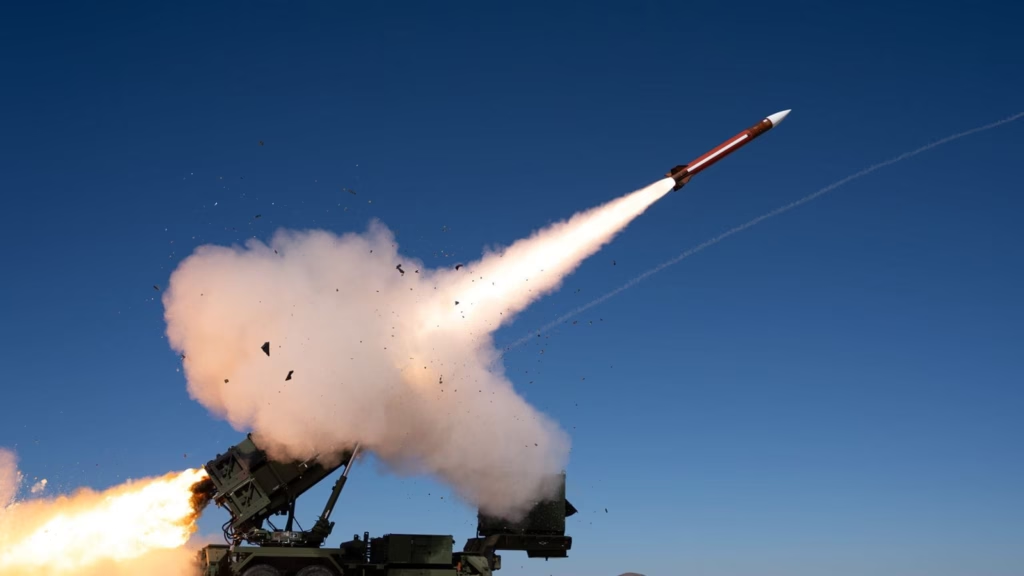
You’re looking at a major boost to Europe’s air defense as Raytheon prepares to deliver its advanced Patriot air defense system to the Netherlands. This isn’t just a single piece of equipment—it’s a complete, integrated system designed to detect, track, and destroy a wide range of aerial threats before they ever reach their targets.
What makes this system so important is how everything works together. You’ve got powerful radars scanning the skies, command-and-control units processing data in real time, and interceptor missiles ready to respond within seconds. That combination allows operators to deal with threats like ballistic missiles, cruise missiles, drones, and even advanced fighter aircraft, all within the same defensive network.
Raytheon says it’s continuing to work closely with the Dutch government to upgrade and modernize their defenses, especially at a time when deterrence has become a top priority across Europe. The company is also ramping up production to deliver these systems faster, highlighting just how urgent demand has become for reliable missile defense.
The deal itself includes key components like radar systems, launchers, and command stations, essentially forming the backbone of a fully operational Patriot battery. And according to Raytheon, this system stands out as the only combat-proven ground-based solution capable of handling the full spectrum of air-breathing threats.
One of the reasons the Patriot system has gained global trust is its track record. It’s currently used by 19 countries, including several in Europe, and has seen action in more than 250 combat engagements. Over the years, it has successfully intercepted more than 150 ballistic missiles in real-world operations, showing that it’s not just theoretical capability—it performs under pressure.
At the heart of the system is a phased-array radar that can track multiple targets at once while guiding interceptor missiles with high precision. A typical setup includes that radar unit, an engagement control station where operators make critical decisions, and multiple launchers positioned to respond quickly.
When it comes to the missiles themselves, there are two main types. The PAC-2 offers longer range and is effective against aircraft and cruise missiles, while the newer PAC-3 is designed for precision, using hit-to-kill technology to take down ballistic missiles with direct impact. Each plays a specific role, making the overall system more flexible and effective.
The Patriot system has been used in major conflicts like the Gulf War and the Iraq War, and it continues to be a key part of modern air defense strategies around the world. Its ability to operate in all weather conditions, move quickly, and handle multiple threats at once makes it highly valuable.
That said, it’s not without limitations. These systems are expensive to deploy and maintain, and their coverage area is relatively limited compared to some long-range alternatives. That’s why they’re most effective when used as part of a layered defense system, working alongside other technologies to create a more complete shield.
At the end of the day, this deal reflects a bigger global trend: countries are investing heavily in advanced air defense as threats become more complex. And with systems like Patriot, the focus is clearly on staying one step ahead.