
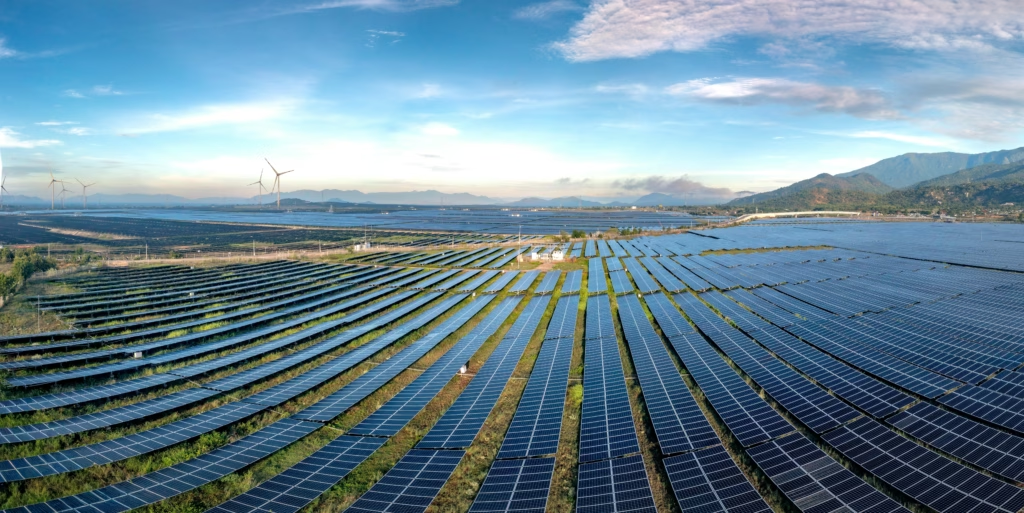
The UK has just approved its largest power-generating solar farm, and it’s a big move in the country’s push toward clean energy. After going through a planning inquiry, the massive 800MW Springwell Solar Farm has officially been given the green light. It will be built between Lincoln and Sleaford and is expected to generate enough electricity to power around 180,000 homes, making it one of the most significant renewable energy projects in the region.
This decision is part of a broader effort by the government to speed up the shift toward homegrown renewable energy. With global fossil fuel markets often unstable, especially due to geopolitical tensions, the UK is aiming to rely more on energy it can produce domestically. Solar power is playing a major role in that plan, especially since it has become one of the most affordable energy sources available today.
The Springwell project reflects how quickly solar energy is expanding across the country. Alongside this development, the UK has been rolling out plug-in solar systems in retail spaces and even making solar installations a standard feature for new homes in England. The goal is to integrate clean energy into everyday life, not just large-scale projects.
The solar farm itself will be built near Navenby and will cover an area roughly the size of 1,700 football pitches. In addition to generating solar power, the site will include a battery storage system, which is key for improving reliability and helping balance the energy grid. This means the electricity generated can be stored and used when it’s needed most, making the system more efficient overall. If everything goes as planned, the site should start producing electricity by 2029.
Not everyone is happy about the project, though. Some local residents and campaign groups have raised concerns about its size and potential environmental impact. There has been strong opposition, with ongoing efforts to challenge the development. Still, the government has moved forward, emphasizing the long-term benefits of clean energy and reduced dependence on fossil fuels.
Developers say the solar farm is designed with sustainability in mind. Like many solar projects, it will have a lifespan of around 40 years and is intended to operate with minimal disruption to the land. The soil beneath the panels can remain healthy, and once the project reaches the end of its life, the land can be restored for agricultural use. This approach aims to ensure the land retains its long-term value.
There are also plans to make sure the local community benefits from the project. Developers have said they want to work closely with residents to support local initiatives and create opportunities that bring shared advantages over the lifetime of the solar farm.
At the same time, the UK is also looking ahead to the future of energy in a much bigger way. A recent government-backed study has explored the potential of space-based solar power. The idea is to collect solar energy in orbit, where sunlight is constant, and then beam it back to Earth. This could provide a steady and reliable source of clean electricity, helping solve one of the biggest challenges with traditional solar power—intermittency.
The study suggests placing receivers within existing offshore wind farms to take advantage of current grid connections. These receivers would capture energy sent from satellites in geostationary orbit and convert it into electricity. According to the findings, a single space-based system could generate up to two gigawatts of continuous power, which is a huge leap compared to ground-based solar systems.
All of this shows how serious the UK is about transforming its energy landscape. From massive solar farms on land to ambitious projects in space, the country is exploring multiple paths to secure a cleaner and more stable energy future.