
Have you ever wondered what powers the stove, heats your home in winter, or even helps produce electricity? Chances are, natural gas plays a part. Even though it’s invisible and silent, it’s one of the most important sources of energy in the world. Understanding what natural gas energy is and how it works can feel complicated at first, but it’s really just the story of a gas trapped deep in the Earth that humans learned to use to make life easier.
Natural gas is a type of fossil fuel, just like oil and coal. It forms over millions of years from the remains of tiny plants and animals buried under layers of rock and sediment. Over time, heat and pressure transform these remains into gas. Unlike coal, which is solid, natural gas is made mostly of methane, a colorless, odorless gas that burns very efficiently. Humans have learned to capture this gas and use it as energy for heating, cooking, and even generating electricity.
One of the most fascinating things about natural gas is how versatile it is. You can think of it like a multitool for energy. It powers homes, fuels cars, and even serves as raw material for products like plastics and fertilizers. Because it’s cleaner than other fossil fuels, people often call it a “bridge fuel” as the world slowly moves toward renewable energy like solar and wind.
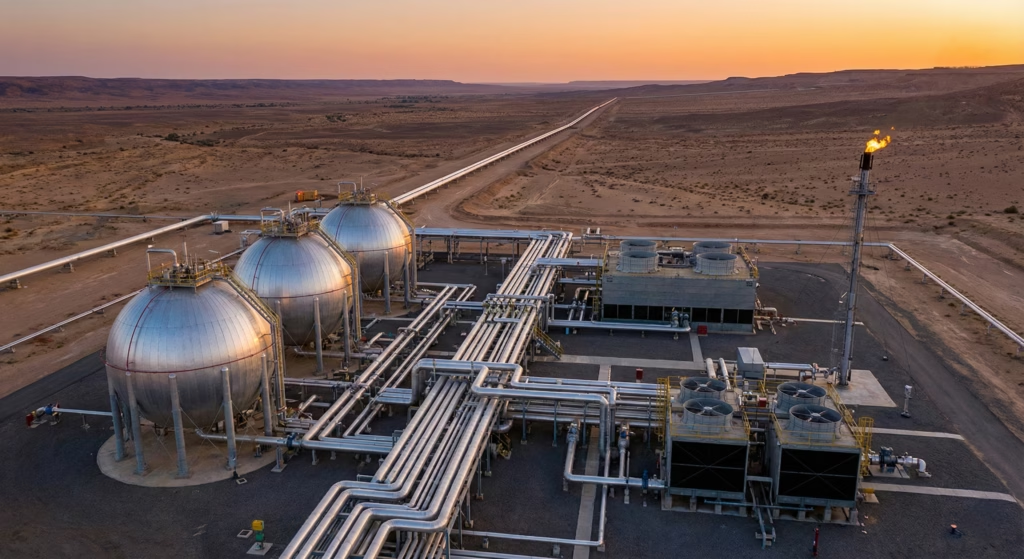
Natural gas energy starts underground. Companies drill into rock formations to release the gas trapped inside. Once it’s collected, the gas is cleaned to remove impurities, like water vapor and other gases. After that, it travels through pipelines to homes, businesses, and power plants. At a power plant, the gas is burned to create heat, which produces steam that spins turbines. The spinning turbines generate electricity, which powers everything from your smartphone to the lights in your house.
One of the biggest advantages of natural gas energy is its efficiency. Compared with coal, it produces less carbon dioxide for the same amount of energy. That doesn’t mean it’s perfect for the environment, but it is cleaner and more efficient. People also like it because natural gas can be turned on and off quickly. Unlike solar or wind energy, which depend on sunlight or wind, natural gas plants can respond to changing energy demands almost instantly.
Safety is another reason natural gas is widely used. Because it is lighter than air, if a leak occurs, it disperses quickly into the atmosphere. Special additives give it a strong odor so people can detect leaks easily. Pipelines are monitored carefully, and safety systems are in place to prevent accidents. Even so, handling natural gas requires caution and respect for its energy potential.
Natural gas energy has shaped modern life in ways many people don’t notice. In winter, your home stays warm, water heaters run efficiently, and many industries keep functioning because natural gas provides a reliable source of heat and power. In addition to electricity and heating, natural gas is increasingly used in transportation. Vehicles that run on compressed natural gas produce fewer emissions than gasoline or diesel-powered cars.
Despite its advantages, natural gas is still a fossil fuel, and burning it releases greenhouse gases, mainly carbon dioxide and methane. Methane is a particularly potent greenhouse gas if it escapes into the atmosphere before being burned. That’s why there is a growing focus on reducing leaks during extraction, transportation, and use. Some experts argue that switching from coal to natural gas can help reduce carbon emissions in the short term, but long-term solutions must involve renewables.
One interesting trend in natural gas energy is liquefied natural gas, or LNG. By cooling natural gas to extremely low temperatures, it becomes liquid and can be transported across oceans in special tankers. This makes natural gas a global energy commodity, connecting regions with abundant supplies to those with high demand. LNG allows countries to balance their energy needs and reduces dependence on a single source.
Natural gas also has a role in renewable energy systems. It can work alongside solar and wind farms to provide backup power when the sun isn’t shining or the wind isn’t blowing. This combination makes the energy grid more reliable and flexible. Some scientists are also exploring how natural gas can be paired with carbon capture technology, which traps carbon dioxide before it enters the atmosphere, making its use even cleaner.
Understanding natural gas energy also means thinking about its impact on communities. Extraction and drilling can affect local ecosystems, water supplies, and even the lives of people living near drill sites. Responsible management and regulation are essential to make sure the benefits of natural gas don’t come at too high a cost. Energy companies are increasingly working to minimize environmental damage and improve safety standards, but public awareness remains crucial.
People often confuse natural gas with other fuels. Oil, for example, is heavier and liquid, while coal is solid. Natural gas is cleaner-burning and leaves less residue behind. Because of this, it’s often preferred for residential heating and electricity production. Understanding these differences helps explain why countries choose different energy strategies depending on resources, technology, and environmental goals.
Natural gas is also helping the world transition to a lower-carbon future. Countries with large natural gas reserves can replace coal in electricity generation, cutting emissions while still meeting growing energy demands. Some experts believe natural gas could be a stepping stone to hydrogen energy, which produces almost no emissions. Hydrogen can be made using natural gas through a process called steam methane reforming, showing how natural gas might help bridge the gap between fossil fuels and fully renewable energy.
The economics of natural gas are important too. Prices can fluctuate depending on supply and demand, geopolitical factors, and weather. Cold winters often increase demand, while new discoveries of reserves can push prices down. Natural gas markets are complex and global, but understanding the basics shows why this energy source is so central to daily life.
Natural gas energy might seem invisible, but its effects are everywhere. It powers industries that make products we use every day, heats homes in the coldest seasons, fuels vehicles, and generates electricity for millions of people. Learning about natural gas isn’t just about science; it’s about understanding how modern society works and how humans interact with the resources around them.
People often ask whether we will run out of natural gas. Technically, it is a finite resource, but discoveries of new reserves and improvements in extraction technology keep supplies sufficient for decades. Hydraulic fracturing, or fracking, has unlocked previously inaccessible reserves, increasing availability. While debates about environmental impacts continue, the energy itself remains abundant enough to play a major role in the near future.
Natural gas energy is also an everyday convenience. Lighting a stove, turning on a heater, or enjoying a hot shower often depends on it. It is silent, efficient, and incredibly useful. Yet it also reminds us that energy comes from natural resources that must be managed responsibly. Learning how it works helps people make informed choices about energy use, sustainability, and the future of the planet.
In conclusion, natural gas energy is more than just a gas in the ground. It is a powerful and flexible energy source that shapes modern life. Cleaner than coal and oil, yet still finite and fossil-based, it serves as both a practical tool today and a bridge toward cleaner energy tomorrow. Understanding natural gas means appreciating how it fuels homes, powers industry, and interacts with the environment, while also recognizing the responsibility humans carry in using it wisely.