
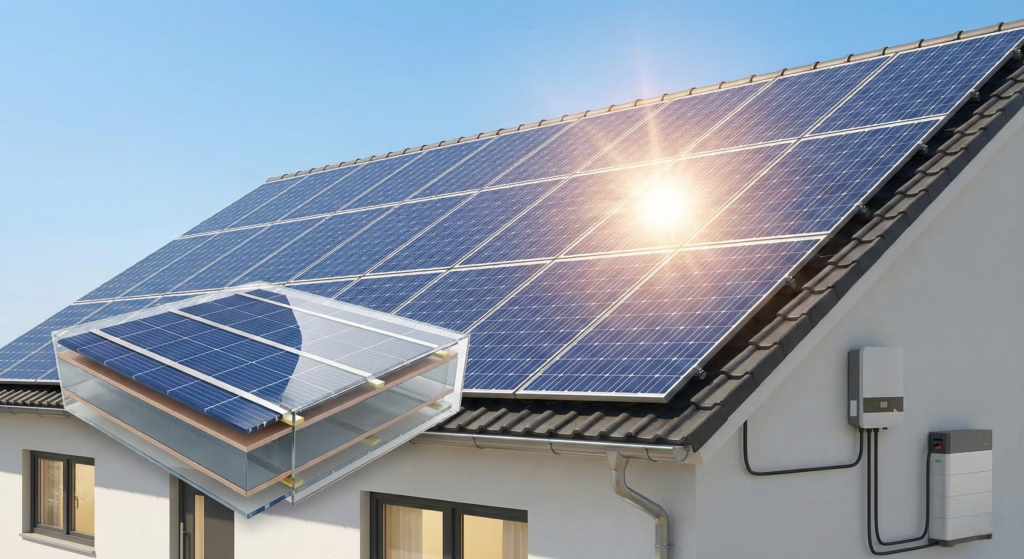
Every morning the sun rises and quietly floods the Earth with energy. Long before humans built power plants or wires, sunlight was already warming the planet and fueling life. Solar energy is our way of tapping into that constant flow of power and turning it into electricity we can actually use. It feels almost magical, yet the science behind it is surprisingly easy to understand.
What solar energy really means
Solar energy is simply energy that comes from the sun. The sun produces enormous amounts of energy through reactions at its core, sending light and heat across space. When that sunlight reaches Earth, it carries energy that can be captured and converted. Solar power systems are designed to collect this energy instead of letting it bounce harmlessly back into the sky.
The role of solar panels
Solar panels are the most visible part of solar energy systems. You have likely seen them on rooftops, in open fields, or even on calculators. Each panel is made up of many smaller units called solar cells. These cells are built from special materials, usually silicon, that react when sunlight hits them.
When light reaches a solar cell, it excites tiny particles called electrons. Those electrons start moving, and that movement creates an electric current. This process happens instantly and silently, turning sunlight directly into electricity without smoke, noise, or moving parts.
From raw sunlight to usable electricity
The electricity created by solar panels is not quite ready to power your home at first. It comes out as direct current, which is not what most household devices use. An inverter steps in to solve this problem. The inverter converts the electricity into alternating current, the type that flows through wall outlets.
Once converted, the electricity can power lights, appliances, and electronics right away. Any extra energy can be stored in batteries for later use or sent back to the power grid, helping supply electricity to other homes nearby.
Solar energy during cloudy days and nighttime
A common question is what happens when the sun is not shining. Solar panels still produce some electricity on cloudy days, just less than on bright, sunny ones. At night, panels stop generating power altogether. This is where batteries and the larger power grid play an important role. Stored energy and grid connections ensure that electricity remains available even when sunlight is gone.
Why solar energy is considered clean
Solar energy is called clean because it does not release pollution while generating electricity. There is no burning of fuel and no release of harmful gases into the air. Once solar panels are installed, they quietly produce power using a source that shows up every day. This makes solar energy an important tool in reducing air pollution and slowing climate change.
Solar power at different scales
Solar energy works for more than just homes. Large solar farms spread across wide areas can supply electricity to entire cities. Smaller systems can power remote cabins, streetlights, or even spacecraft. The same basic technology scales up or down depending on the need, making solar energy incredibly flexible.
The future shaped by sunlight
Solar energy continues to grow as technology improves and costs decrease. Panels last longer, store energy better, and work more efficiently than ever before. Choosing solar power is not just about saving money or using new technology. It is about recognizing the sun as a reliable partner in meeting our energy needs.
Each ray of sunlight carries possibility. Every solar panel is a reminder that clean energy does not have to be complicated. It can be as natural and steady as the sunrise itself.